
This map is circulating around the internet, which we suspect has the governor of Kentucky approving its message:
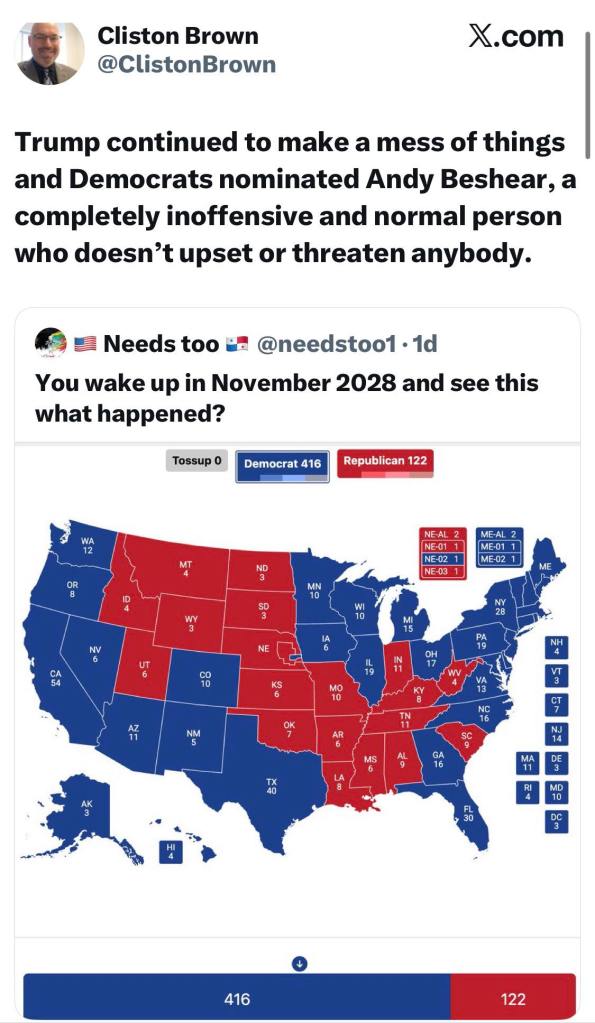
We’re sure Andy is happy to see this, but another commenter has a separate message worth considering. According to U.S. Life Scene:
This kind of scenario sounds simple on paper, but it rests on a chain of assumptions that rarely hold up in real elections.
Blaming one side’s missteps while assuming the other can coast with a “safe” and inoffensive candidate ignores how competitive national politics actually is. Voters are not just reacting to personalities, they are weighing economy, policy, and trust, all at once.
The idea of a 400+ electoral landslide in today’s environment demands something far bigger than just a weak opponent or a calm nominee. It would require a near-total collapse of one side across multiple regions, something modern elections have consistently resisted.
The real debate is not about whether one candidate feels less controversial. It is whether any political environment today is stable enough to produce that kind of overwhelming result, or whether this is simply a projection driven more by preference than probability.
Two things:
A 400+ electoral landslide doesn’t require a “near total collapse.” Look at the 1984 result:
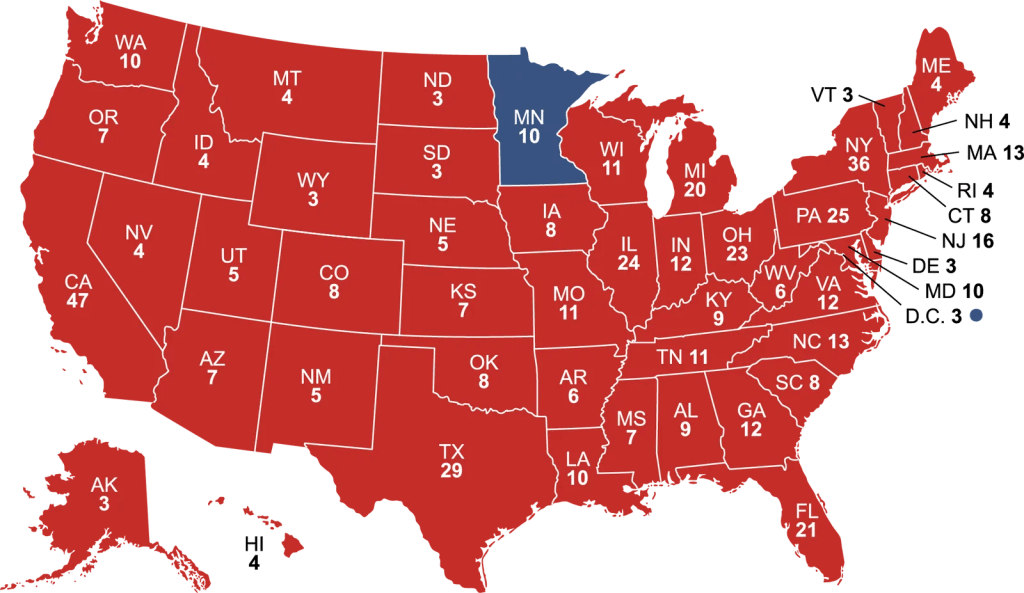
That was Ronald Reagan vs. Walter Mondale. Incumbency played a huge role, given that Mondale only won D.C. and his home state.
And look at 1972:
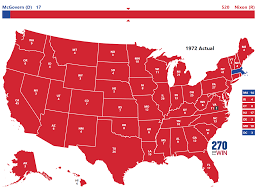
That was Nixon vs. McGovern. Nixon was corrupt as we all know now, but he only lost Massachusetts and D.C.
But that’s two Republican landslides. Surely a Democrat can’t get 400 electoral votes:
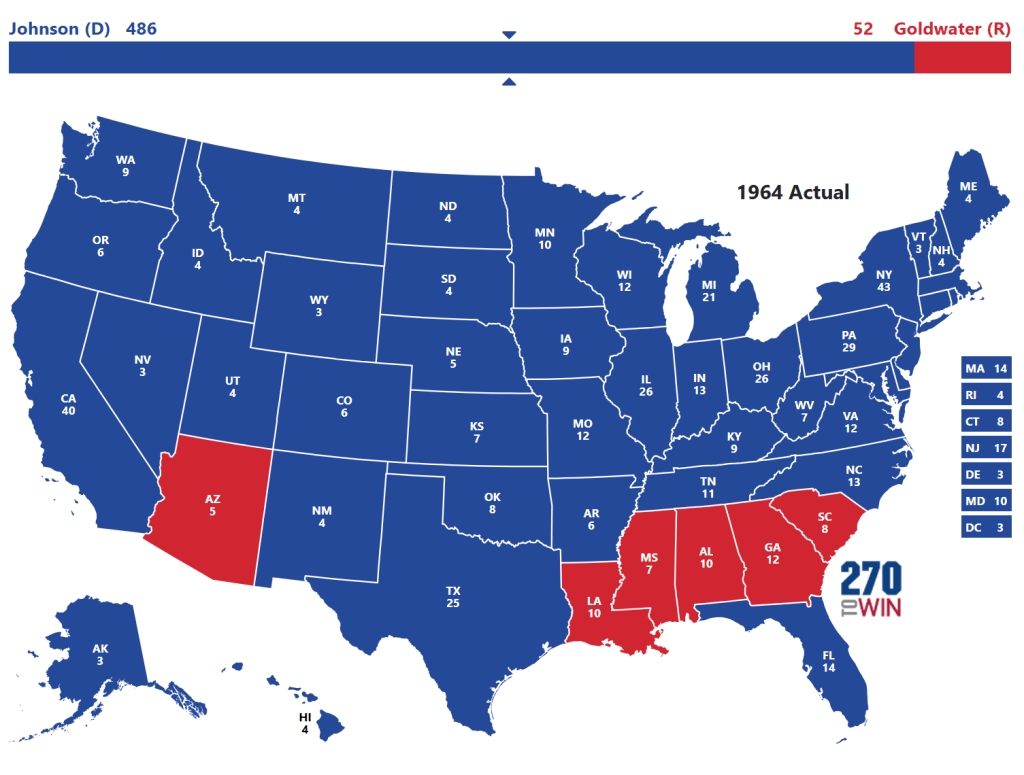
That’s Johnson vs. Goldwater. Another election in which the 400+ electoral vote ceiling is shattered.
So, the “400+” threshold isn’t a rare occurrence. Republicans and Democrats have done it plenty of times during my lifetime. The November 2028 chart isn’t out of the question. It’s just a matter of whom the Democrats select to lead the party.

Leave a Reply